



How Do Health Insurance Premiums Work — and Why Do They Keep Going Up?


In this article, we'll explore:
How Do Health Insurance Premiums Work — and Why Do They Keep Going Up?
How Health Insurance Premiums Are Calculated
Understanding Why Health Insurance Premiums Continue to Rise
How Renewal Periods Affect Your Health Insurance Premiums
What Employers Can Control — and What They Can’t
How a PEO Can Help Stabilize Health Insurance Premiums

For small and mid-sized businesses, rising health insurance costs aren’t just a budget line item — they’re a growing source of pressure that impacts nearly every part of the organization. Health insurance premiums continue to climb year over year, often faster than revenue or wages, leaving employers with difficult decisions about plan design, cost-sharing, and long-term sustainability. At the same time, business owners want to offer benefits that their employees value, rely on, and trust, without pricing themselves out of growth.
Understanding how health insurance premiums behave over time is an important part of long-term workforce planning. When the underlying drivers behind premium increases aren’t always clear, it can be challenging to forecast costs accurately, evaluate plan performance, or adjust your benefits strategy with confidence.
In this guide, we’ll break down how health insurance premiums are determined, examine the primary factors behind rising costs, and explore how employee benefits outsourcing through a professional employer organization (PEO) can help bring more stability, buying power, and clarity to your benefits strategy — supporting cost control and a better employee experience.
How Health Insurance Premiums Are Calculated: The Fundamentals
Before breaking down the specific factors that influence pricing, it helps to understand the baseline. What is a health insurance premium? A health insurance premium is the amount your business and/or employees pay each month to keep coverage active.
For employers, premiums represent one of the most significant ongoing benefits-related expenses and require thoughtful budgeting, regular review, and long-term planning.
Health insurance premiums are calculated using a defined set of factors. Understanding these fundamentals can help you better anticipate changes, ask more informed questions during renewal, and evaluate the overall benefits strategy for your business.
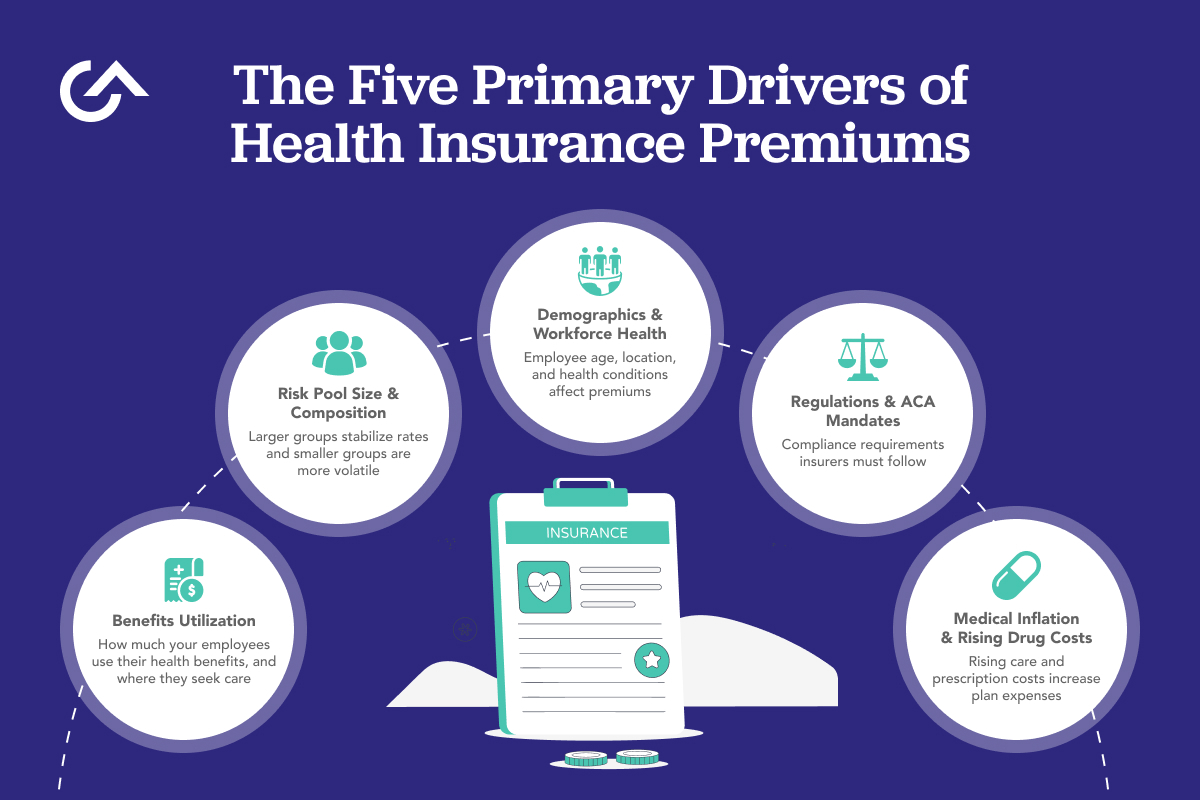
The primary drivers behind premium pricing include:
1. Claims Experience
Claims experience is the most significant factor affecting premium rates. In short, how often and how extensively employees use health insurance directly impacts overall costs. That means:
- When claims are higher, premiums typically increase.
- When claims are lower, premium rates are more likely to remain stable.
For small groups in particular, even a few large or unexpected claims, such as major surgeries, complex medical treatments, childbirth, or high-cost specialty medications, can dramatically increase renewal rates from one year to the next.
2. Risk Pooling
Health insurance operates on a principle known as risk pooling, which spreads financial risk across a group of covered individuals. As a result:
- Smaller employee groups generally experience greater premium volatility because costs are spread across fewer people.
- Larger groups tend to see more predictable pricing, as individual claims have less impact on the overall pool.
For small and mid-sized companies, this dynamic means that individual claims can carry more weight, increasing year-over-year variability. While risk pooling doesn’t eliminate rising costs, understanding how group size affects pricing can help your business better evaluate coverage options and long-term benefits strategies.
3. Demographics
Premiums are also influenced by the overall makeup of your workforce, including:
- Average age of employees
- Business location
- General employee health trends
- Industry-related risk factors
A workforce with an older average age or greater medical needs will typically experience higher baseline premiums. Understanding your workforce demographics can help you anticipate cost changes and make more informed decisions during plan selection and renewal.
4. Regulatory Requirements
Health insurance pricing is also impacted by federal and state regulations, including mandates under the Affordable Care Act (ACA). These requirements determine what plans must cover and set guidelines for how premiums are priced.
As a result, premiums reflect regulatory standards, such as:
- Essential health benefits mandated by law
- Limits on how much pricing can vary based on age or other factors
- Preventive care coverage requirements
While these rules are designed to protect employees and ensure consistent access to care, they also play a meaningful role in how health insurance premiums are calculated and adjusted over time.
Understanding Why Health Insurance Premiums Continue to Rise
Even if the size and makeup of your workforce remain relatively stable, health insurance premiums tend to increase over time — and often at a faster pace than other business expenses. These increases are driven by a combination of system-wide healthcare cost trends, evolving treatment options, rising prescription drug prices, and longer-term population health needs. Understanding what’s behind these trends can help your business better anticipate renewal outcomes and plan more proactively.
Below are some of the most significant drivers contributing to ongoing premium increases.
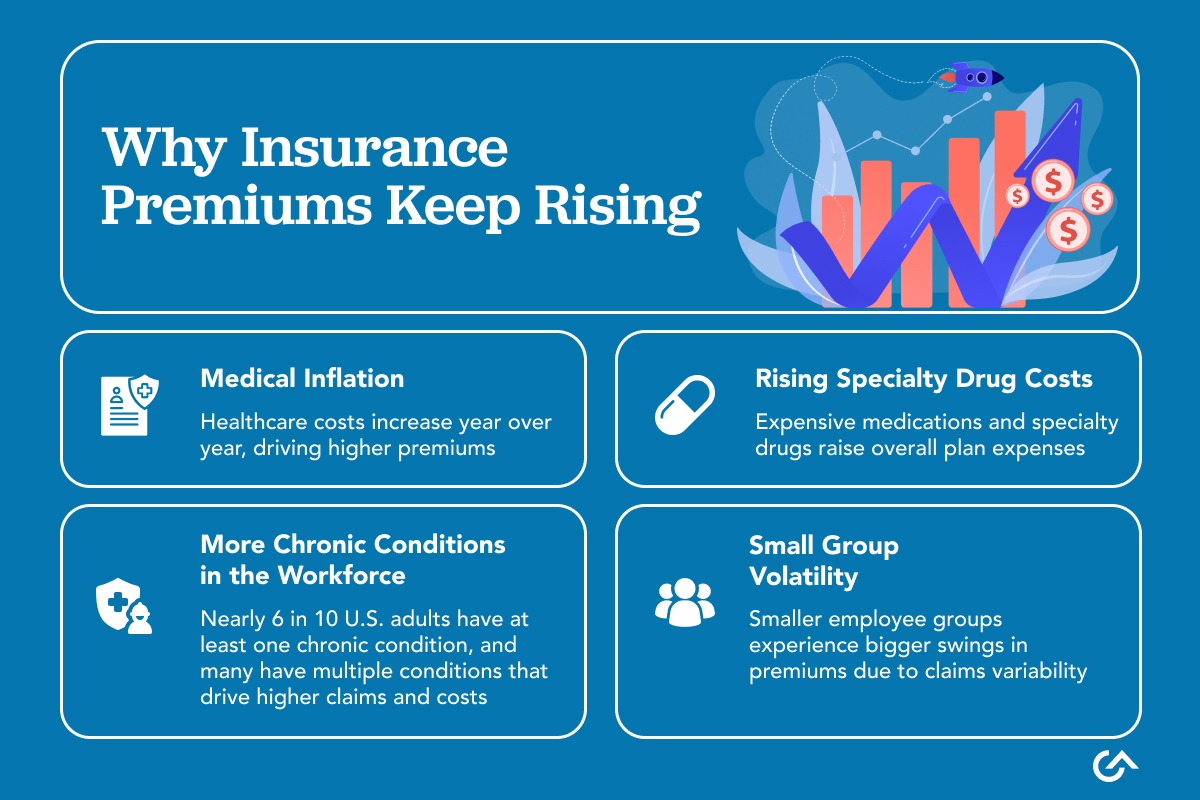
Medical Inflation
Annual medical inflation consistently outpaces general economic inflation due to a range of structural pressures within the healthcare system, including:
- Higher hospital and facility costs
- Rising costs associated with care delivery, including advanced diagnostics, procedures, and technologies
- Healthcare labor shortages, which continue to push provider compensation higher across many regions
Together, these pressures increase the baseline cost of care, which insurers factor into premium calculations year after year, regardless of individual employer claims experience.
Rising Pharmacy and Specialty Drug Costs
Prescription drug spending, particularly for specialty medications, has become one of the fastest-growing components of healthcare costs.
Treatments for conditions such as cancer, autoimmune disorders, and rare diseases can cost tens of thousands of dollars per month. While these represent a relatively small share of total prescriptions and treatments, they account for a disproportionate share of overall claims spending, placing upward pressure on premiums across all group sizes.
As specialty drug utilization continues to expand, insurers must account for this financial risk when setting future premium rates.
More Chronic Conditions in the Workforce
Chronic health conditions such as diabetes, obesity, and cardiovascular disease have become increasingly common within the working population. These long-term conditions typically require ongoing medical care, prescription medications, and regular monitoring, rather than one-time treatment.
Over time, higher rates of chronic illness contribute to sustained claims activity, which can raise overall costs for employer-sponsored health plans, even when acute or catastrophic claims are limited.
Unique Challenges Faced by Small Employer Groups
While larger organizations can often absorb high-cost claims across broader employee populations, small and mid-sized businesses face a different reality.
With fewer employees in the risk pool:
- Individual high-cost claims have a greater impact on overall plan performance
- Year-over-year premium changes can be more pronounced
- Stability is harder to maintain, even with careful plan design and cost-sharing strategies
This is why SMBs frequently experience larger or less predictable renewal increases, despite taking proactive steps to manage benefits responsibly.
How Renewal Periods Affect Your Health Insurance Premiums
For many employers, renewal season is one of the most consequential and least predictable parts of the benefits cycle. It’s when rising healthcare costs, claims activity, and market conditions translate into real budget decisions for the year ahead. During this period, your insurance provider reassesses your company’s overall risk profile and determines premium rates for the upcoming plan year.
Even if your health plan hasn’t changed, your renewal rate can still shift based on factors including:
- Your company’s claims history
- Changes in employee demographics
- Performance of the carrier’s broader risk pool (statewide or national)
- Broader trends in the healthcare industry
- Adjustments made to your plan’s design
For small employers, these shifts are often more pronounced. In a smaller group, even a few high-cost claims can significantly impact overall costs. This volatility can make long-term budgeting and benefits planning especially challenging.
Reducing Renewal Volatility Through a PEO Partnership
One way small and mid-sized businesses can reduce renewal volatility is by partnering with a PEO. A PEO pools employees across thousands of client companies, giving smaller employers access to the purchasing power typically associated with much larger organizations.
As a result, your business may benefit from:
- Access to affordable, Fortune 500-level health plan options typically available only to larger organizations
- Broader plan choices and more competitive pricing
- Reduced health insurance premium volatility, as risk is spread across a larger employee population
- More predictable renewal patterns over time
Beyond benefits options and stabilization, working with a PEO also provides you with streamlined HR administration, expert compliance guidance, integrated HR technology, and more, giving you and your team time back to focus on growth while maintaining a strong employee-focused culture.
What Employers Can Control — and What They Can’t
While employers can’t control every factor that drives health insurance costs, there are areas where your decisions can meaningfully influence premium outcomes and cost stability over time. Understanding the difference between what you can influence and what sits outside your control helps you plan more effectively, set realistic expectations, and identify where support from a PEO or employee benefits partner can deliver the most value.
How Benefits Design Choices Affect Premiums
One of the most direct ways employers can influence premiums is through benefits plan design. The choices you make, from deductibles to provider networks, play a significant role in shaping both monthly premium costs and the employee experience.
While adjusting these elements can help you manage premiums, it’s important to balance cost savings with access to quality care and reasonable out-of-pocket expenses for employees.
Examples of plan design considerations include:
- Deductibles, copays, and coinsurance
- Coverage levels (Gold, Silver, or Bronze tiers)
- Provider network size (narrow networks with lower costs vs. broader networks with more provider choice)
Reviewing these options can help you control costs without sacrificing your employees' access to quality care.
Selecting the Right Carrier and Plan Options
The insurance carrier you choose and how your plan is set up can have a real impact on your annual benefits budget. During renewal, employers are often presented with multiple plan options that vary in cost, coverage, and provider access. Taking the time to compare those options can help you avoid paying more for coverage that doesn’t fully meet your employees’ needs.
For small and mid-sized businesses, this process can be especially challenging. With fewer employees, insurers typically offer less pricing flexibility, and the differences between plans aren’t always obvious at first glance. Working with an experienced benefits advisor can help you understand what’s driving the cost differences between plans, compare options side by side, and choose coverage that fits both your budget and your workforce.
Steps that often help businesses manage health insurance costs include:
- Comparing renewal quotes side by side to see what’s changing
- Reviewing how much your company and employees each contribute toward premiums
- Considering whether bundling health, dental, and vision coverage creates cost savings
A benefits advisor helps you evaluate plan options within your existing insurance market and budget. A PEO, on the other hand, provides you with access to its own large-group benefit plans and manages benefits administration as part of a broader HR outsourcing relationship. If your organization is looking for both day-to-day HR support and access to larger-scale benefits options, a PEO may offer a more comprehensive solution.
Employee Wellness and Benefits Utilization Programs
How employees use their benefits also plays a role in long-term cost trends. Programs that encourage preventive care, early intervention, and informed healthcare decisions can help reduce avoidable or higher-cost claims over time.
Wellness and benefits utilization initiatives don’t deliver instant savings, but they support healthier behaviors, better engagement, and more appropriate use of care, which can help slow the rise of health insurance premiums in the long run.
Program examples include:
- Preventive care reminders and regular health screenings
- Wellness incentives and structured health challenges
- Access to telehealth services for convenient, lower-cost care
- Chronic condition management programs and educational resources
Investing in education and encouraging early detection empowers employees to make informed decisions about their health. These initiatives contribute to long-term cost savings for your business by reducing unnecessary claims and improving overall health outcomes.
Understanding Cost Drivers Outside Employer Control
Some cost drivers are simply beyond an employer’s control. Recognizing these limitations helps you set realistic expectations and focus planning efforts where they can make a difference.
Examples of factors employers typically cannot control include:
- Medical inflation and increased provider fees
- Rising costs for prescription and specialty medications
- Regulatory mandates, including ACA and state requirements
- Broader healthcare cost trends across the insured population — not just your own employees
- Unpredictable high-cost or catastrophic claims
Due to these external factors, your health insurance premiums can rise year after year, even if your workforce is stable and your benefits plan is well designed. Understanding this reality helps you set expectations and plan ahead, so you can manage your organization's health insurance expenses more effectively.
How a PEO Can Help Stabilize Health Insurance Premiums
Health insurance costs can feel unpredictable, especially for small and mid-sized businesses that don’t have the benefits expertise or large-scale purchasing power of a larger organization. Partnering with a PEO and outsourcing your employee benefits administration changes the structure behind how your benefits are purchased and managed. Rather than navigating the market on your own, you gain access to large-group benefit plans, centralized administration, and experienced guidance — all of which help you achieve more stable, predictable costs while reducing the administrative burden on your internal team.
Leveraging a Larger Risk Pool to Minimize Premium Volatility
When you partner with a PEO, your employees are covered under the PEO’s benefits plans, alongside employees from thousands of other client companies. This creates a much larger employee population than most small or mid-sized businesses could achieve on their own.
Because costs and claims are spread across a broader group:
- Individual high-cost claims are less likely to significantly impact your renewal
- Year-over-year premium changes tend to be more predictable
- Premium pricing is influenced more by long-term trends than short-term claim activity
This broader risk pool doesn’t eliminate rising healthcare costs, but it can help reduce volatility and make renewal outcomes easier to anticipate.
Accessing Large-Group Plans and Professional Negotiation
PEOs purchase health insurance as a large group on behalf of all their client companies and their employees. That scale and purchasing power allow PEOs to offer plan options, pricing, and carrier access that many small and mid-sized businesses wouldn’t be able to secure on their own.
As part of a PEO partnership, your business can benefit from:
- More competitive pricing and lower overall health insurance premiums
- Access to high-quality, Fortune 500-level health plan options
- A wide range of plan designs that balance cost with coverage
Because the PEO handles carrier negotiations and benefits administration, you gain access to these advantages without adding extra work for your internal team.
Employee Education and Ongoing Benefits Support
How employees use their benefits also affects long-term costs. As part of their broader HR and benefits administration services, PEOs typically provide employee education, enrollment support, and ongoing guidance to help employees understand and use their benefits more effectively.
This support may include:
- Encouraging preventive care and regular screenings
- Helping employees understand plan options, provider choices, and how their benefits work
- Guiding employees toward lower-cost care options, when appropriate
- Supporting employees with questions throughout the year, not just during open enrollment
When employees understand how their benefits work and make informed healthcare decisions, it supports healthier outcomes and can keep claims and health insurance premiums more stable over time.

Take the Next Step — Control Your Health Insurance Costs
Rising health insurance costs can feel overwhelming, especially when many of the drivers are outside of your control. The right support can help bring more clarity, stability, and confidence to your benefits strategy. Partnering with a PEO gives you access to large-group health plans, experienced guidance, and ongoing benefits support — so you’re not navigating renewals, pricing changes, and employee questions on your own.
If you’re looking to simplify benefits, support your employees, and better manage health insurance costs, G&A Partners can help. Reach out to one of our experts today to learn how our PEO services can help stabilize — or potentially lower — your health insurance costs while reducing administrative burden.
Frequently Asked Questions About Health Insurance Premiums