


- HR Speak
- Hiring & Retention
- The SMB Readiness Report: Small Business Hiring Trends in 2026
The SMB Readiness Report: Small Business Hiring Trends in 2026



If your approach to hiring feels different than it did a couple of years ago — more careful, strategic, maybe a little more uncertain — the data from our G&A Partners 2026 SMB Readiness Report suggests you're on track with where most small business owners are right now.
Below, we dive deeper into the data from our 2026 report to understand what's driving that shift and what it means for businesses like yours. What we found is a workforce landscape in transition — not in freefall, but changing in ways worth paying attention to.
Optimistic, but Operationally Different
In the wake of economic pressures, you may find yourself recalibrating what your workforce planning looks like right now rather than pushing for growth. If so, you're not alone. The 2026 SMB Readiness report shows that the majority of SMBs are opting for a leaner workforce:
- 77% are delaying or stopping hiring new workers/employees
- 57% have laid off workers/employees
- 47% have hired new workers/employees
This split between forward momentum and a standstill is somewhat reminiscent of the uncertainty during the COVID era, but with a more positive mindset this time. Because if you're an SMB owner who lived through COVID, you already know what intense disruption looks and feels like, so you're now able to navigate today's economy with more clarity and less panic.
Doing More with Less
Hiring challenges for small businesses are showing up in how work gets done and who's doing it. And it's happening against a backdrop that's shifting back toward employers.
While unemployment is hovering around 4.1%, CNBC reports that the number is partly misleading — many workers have simply given up the job search after struggling to land interviews in a “low hire” market. In other words, candidates applying to hundreds of openings are feeling a real disconnect when employers say they can’t find good people.
For SMB owners, that dynamic means more leverage in the hiring process. You may take longer to decide and/or be more deliberate about who joins your team. But according to the data, many of you aren't filling roles at all.
- 53% have increased reliance on fewer workers
- 47% have reassigned employees into roles they weren't originally hired for, combining positions and cross-training teams
- 56% have delayed or eliminated raises, bonuses, or promotions, keeping costs in check while asking more of the people already on the payroll
This means employees are absorbing more than they signed up for. Without intentional employee retention strategies, that added burden becomes a flight risk. And in a market where finding and onboarding a replacement is costly and time-consuming, losing a key employee can be a significant setback. But for now, with fewer alternatives in the market, having a job (even a harder one) can feel more valuable than the uncertainty of looking for a new one.
Mission Critical vs. Everything Else
As workforce planning evolves, so does strategy. SMB owners are protecting the roles that generate revenue and require irreplaceable human judgment, but most everything else is up for consideration, particularly back-office functions, repetitive administrative tasks, and high-volume processes that can be rerouted elsewhere.
- 58% of SMBs have already made a shift towards prioritizing high-margin or core business services over broader operational investments
- 39% have moved toward contractors instead of full-time employees as part of their talent acquisition strategies
- 26% are investing in automation and AI in place of new hires to navigate labor shortages and rising labor costs
For some, this may be a short-term strategy, but these moves carry risks that don't always show up right away. When SMBs are leaning harder on fewer workers, burnout becomes the most underestimated threat. Productivity doesn't drop overnight but over time, and the weight of doing too much shows up in accuracy, focus, customer interactions, and attrition. Plus, the technology investments meant to offset hiring needs come with tradeoffs that aren’t always visible right away. Implementation takes time, training takes budget, and efficiency gains often take longer to show up than expected.
Looking Forward
Running lean can be an effective strategy for a while, but when a business becomes purely reactive, it loses the capacity to think strategically, innovate, and grow. If you're an SMB owner going lean, you don't need to abandon that approach, but you should be aware of its limits and aim to balance efficiency and capacity.
Watch our webinar “Cutting Costs Without Cutting Corners” for a practical discussion on making smarter budget decisions that don’t damage the business you’ve built – or the team you rely on every day.
The data suggests many SMBs are already thinking this way. 40% of SMBs plan to increase hiring in the coming year, 41% plan to invest more in benefits and healthcare coverage, and 34% plan to increase compensation to hold onto the talent they have. This points to SMB owners still building, but with a clearer sense of what it takes to keep the right talent around.
If you're looking for support, G&A Partners helps SMBs find the right balance, with the HR expertise, compliance support, and workforce strategy to operate smarter without losing sight of what matters most.
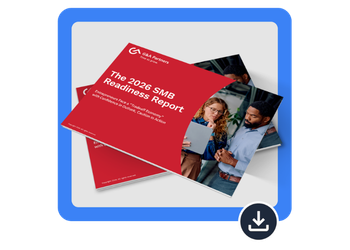
See more insights in the 2026 SMB Readiness Report.
FAQ
Why are small businesses delaying hiring in 2026?
Primarily due to uncertainty. Economic pressures, rising operating costs, workforce instability, and a more cautious approach to risk are all converging to make SMB owners think twice before adding headcount. In the G&A Partners 2026 SMB Readiness survey, 77% of SMBs said they have delayed or stopped hiring new workers entirely.
What are the biggest workforce challenges facing SMBs today?
The challenges are layered. Labor shortages are making it harder to find qualified candidates. Staffing disruptions are forcing owners to restructure how work gets done. Retention pressure is mounting as employees take on more responsibility without additional compensation. And compliance-related workforce issues are adding an administrative burden that consumes time and resources. Our report noted changes across staffing structures and workforce planning, with 56% of SMBs having delayed or eliminated raises, bonuses, or promotions, and 53% increasing reliance on a shrinking number of workers.
Are small businesses prioritizing hiring or retention?
Many SMBs are actively slowing new hiring while simultaneously doubling down on stabilizing and retaining the workforce they already have. Acquiring new talent and stabilizing the existing workforce both ranked among the top business priorities for the coming year, suggesting that owners understand the value of their current people even as they hesitate to add new ones.
How are small businesses adapting to labor shortages?
Nearly half of SMBs have made organizational changes to cope with staffing pressures, such as reassigning employees to roles they weren't originally hired for, cross-training teams to cover more ground, and leaning more heavily on fewer workers. 39% have also shifted toward contractors instead of full-time employees, trading long-term commitment for near-term flexibility.
Is AI replacing hiring at small businesses?
The G&A Partners SMB Readiness Report shows that nearly half of SMBs are considering using AI or automation to complete work that would have previously required a new hire, but 26% are investing in AI in place of hiring. Generally, most SMBs are applying it selectively to back-office or repetitive tasks rather than completely replacing roles.
What are SMB hiring priorities for the next 12 months?
40% of SMBs plan to increase hiring in the coming year. 41% plan to invest more in benefits and healthcare coverage, and 34% plan to increase compensation to hold onto the talent they have. Taken together, these priorities show that SMBs are still building, just more carefully.